CSA Transportation Featured on CTV News and CityNews: The Diesel Price Surge
CSA Transportation was recently featured on two national news broadcasts, CTV News Toronto and CityNews Calgary, to provide an industry perspective on the current diesel price surge and its impact on the supply chain. Rising fuel costs are creating real challenges across the freight industry, and when reporters reached out, we were glad to offer a behind-the-scenes look at how these changes are affecting the LTL freight industry and the businesses that depend on it.
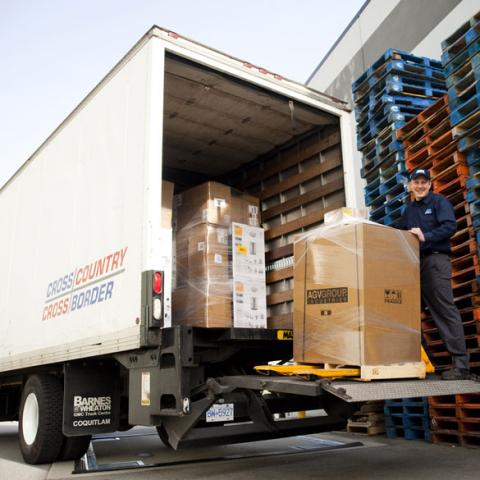
In the News: CTV News Toronto visited CSA's terminal and spoke with our VP of Operations, Rebecca Huebsch. CityNews Calgary interviewed our President and CEO, Herman Fallick. Both segments covered the diesel price surge and its impact on the freight industry. This article recaps those conversations and provides additional context for our customers and logistics partners.
Quick Navigation
An Inside Look at the Industry Impact
When CTV News reporter John Vennavally-Rao visited CSA Transportation's Toronto terminal in late March, diesel in the Greater Toronto Area was already approaching $2.29 per litre, up sharply from roughly $1.60 just weeks earlier. By early April, the national average had climbed to approximately $2.35 per litre, the highest diesel prices Canada has seen since the early days of the Russia-Ukraine conflict in 2022.
For the trucking industry, the numbers translate directly into operating pressure. A single long-haul truck holds approximately 1,000 litres of diesel, meaning a fill-up in Toronto now costs roughly $2,300. That's about $700 more than before the current surge began.
Fuel as a Cost Factor
Fuel can account for up to 30 per cent of total transportation expenses for freight carriers, making diesel price swings one of the single largest variables in freight economics.
Independent Operators
Owner-operators across Canada report fuel cost increases of $700 to $1,000 per truck per month compared to earlier this year, with many absorbing the increase directly out of thin margins.
Partner Carrier Surcharges
Partner carriers that provide linehaul capacity for LTL networks have introduced daily fuel surcharges, with some charging 40 to 80 per cent above base rates on a given day.
In Alberta, the picture is similar. CityNews Calgary reported diesel at roughly $2.20 per litre in early April, with Alberta-based truckers reporting that fill-ups now cost approximately $2,200 per tank, and even more in British Columbia where provincial fuel taxes push prices higher.
How CSA Is Navigating Market Volatility
At CSA Transportation, our approach has been to manage these fluctuations thoughtfully, absorbing what we can while being transparent with our customers about what is changing and why.
No Fuel Surcharge Line Items
Unlike many carriers that apply fluctuating daily fuel surcharges on top of base freight rates, CSA Transportation includes fuel costs within our all-inclusive pricing. This means our customers are not subject to unpredictable daily surcharge adjustments that make it difficult to forecast logistics costs.
Instead, we review our base rates periodically and adjust when necessary. This gives our customers a clear, predictable number to work with rather than a moving target.
7-Day Quote Expiry
CSA previously offered 30-day all-inclusive pricing. In response to the current volatility, we have shifted to a 7-day quote expiry. This change is designed to protect both CSA and our customers from extreme day-to-day swings while still providing the consistency that businesses need to plan their logistics budgets.
This adjustment allows us to continue offering stable, all-inclusive rates without resorting to the daily surcharge model used by many of our competitors.
Herman Fallick, President and CEO of CSA Transportation, spoke with CityNews Calgary about the company's approach to managing the current environment. His focus was on providing stability for customers during an unpredictable period.
"It's a very challenging time for us. We did put a small increase through to our customers, modest, but we are just trying to hold to give people consistency because we are hoping things get back to a little bit more normal."
— Herman Fallick, President & CEO, CSA Transportation (CityNews Calgary, April 6, 2026)
Behind the scenes, CSA continues to optimize operations through LTL consolidation and route planning. By grouping shipments efficiently across our 15-terminal network in Canada and the United States, we reduce the number of partially loaded trucks on the road. That directly reduces fuel consumption per shipment and helps offset some of the cost pressure.
The Consumer Ripple Effect
Diesel doesn't just power trucks. It powers the supply chain. Virtually every consumer product in Canada is transported by truck at some point between manufacturer and store shelf. When freight costs increase, those costs eventually work their way through to retail prices.
Rebecca Huebsch explained this dynamic during her interview with CTV News, noting that the impact extends well beyond the freight industry itself.
"It means that the cost of products is going to go up. The more that vendors have to pay us to move their goods, especially cross border, the more that we're going to be paying for goods."
— Rebecca Huebsch, VP Operations, CSA Transportation (CTV News, March 26, 2026)
Cross-border freight between Canada and the United States is particularly affected. CSA Transportation moves goods ranging from clothing to dry foods and health supplements through our Canada-USA network, and the cost to service key cross-border freight lanes has increased notably. Longer transit distances amplify fuel-related cost increases, and the combination of diesel prices and ongoing trade tariff pressures creates a compounding effect on the landed cost of imported goods.
Industry Context: The Canadian Truck Operators Association (CTOA) has described the current environment as a "double crisis": a prolonged freight slowdown from 2022 through 2025 followed immediately by a sharp rise in diesel costs. Many carriers are navigating the current surge with limited reserves after years of compressed margins.
What Customers Can Do
While diesel prices are beyond any single company's control, there are practical steps customers can take to manage freight costs during periods of fuel volatility.
Choose Transparent Pricing
Work with carriers that offer all-inclusive pricing rather than base rates with fluctuating daily surcharges. All-inclusive models provide predictability and make it easier to forecast logistics costs, even when fuel markets are volatile. Ask your carrier how fuel costs are factored into your rate and how frequently pricing is reviewed.
Consolidate With LTL
LTL shipping consolidates freight from multiple customers onto shared trucks, distributing fuel costs across more shipments. During periods of elevated diesel prices, LTL can be especially cost-effective compared to dedicated truckload service for shipments that don't require a full trailer.
Optimize Pallet Density
Maximizing the amount of product per pallet reduces the number of pallets (and therefore the number of truck movements) required for the same volume of goods. Review your packaging and stacking configurations to ensure you're not shipping excess air.
Maintain Open Communication
Stay in regular contact with your carrier about rate structures, pricing timelines, and any anticipated adjustments. Carriers that proactively communicate about market conditions instead of passing on surprise surcharges help you plan ahead and avoid budget disruptions.
Frequently Asked Questions
Rising diesel prices increase operating costs for carriers and independent truckers across Canada. Fuel can account for up to 30 per cent of total transportation expenses. Many partner carriers have introduced daily fuel surcharges ranging from 40 to 80 per cent, and freight rates on key cross-border lanes have increased as carriers adjust to the higher cost environment.
CSA Transportation does not impose a separate fuel surcharge line item. Instead, CSA includes fuel costs within its all-inclusive freight rates and reviews pricing periodically. In response to current diesel price volatility, CSA has shifted from a 30-day to a 7-day quote expiry, providing customers with consistent, predictable pricing without passing on daily fluctuations.
The primary driver is geopolitical instability in the Middle East. The closure of the Strait of Hormuz, a route that carries roughly 20 per cent of the world's oil supply, has disrupted global fuel markets. While North America is not facing a direct supply shortage, global price increases have pushed Canadian diesel to approximately $2.35 per litre as of early April 2026, the highest level since 2022.
Freight costs are embedded in the price of nearly every consumer product. When transportation expenses increase, those costs are eventually passed through the supply chain, from carrier to shipper to retailer to consumer.
CSA has taken a measured approach: holding off on rate adjustments as long as possible, then implementing a modest increase while shifting to a 7-day price quote window to maintain consistency. CSA also continues to focus on LTL consolidation and route optimization across its 15-terminal network to manage costs without passing unnecessary spikes on to customers.
Customers can manage costs by working with carriers that offer transparent, all-inclusive pricing rather than fluctuating surcharges; consolidating shipments through LTL where possible; optimizing pallet configurations for maximum density; and maintaining open communication with their carrier about rate structures and pricing timelines.
Partner With a Carrier That Keeps You Informed
Market volatility is part of the freight industry. What matters is how your carrier communicates with you about it, and whether their pricing model protects you from unnecessary surprises.
Why CSA Transportation
CSA Transportation provides LTL freight shipping and cross-border freight services across a 15-terminal network in Canada and the United States. Our all-inclusive pricing model, combined with proactive communication during periods of market volatility, helps our customers plan with confidence.
No Fuel Surcharges
All-inclusive pricing with no daily surcharge surprises
7-Day Quote Expiry
Consistent rates reviewed weekly during volatility
15 Terminals
Canada & USA coverage with LTL consolidation
PIP Accredited
Trusted Trader status with CBSA
Get a Freight Quote
Whether you're shipping domestically across Canada or managing regular cross-border lanes to and from the United States, CSA Transportation provides reliable LTL freight service with transparent, all-inclusive pricing.
Or call us: 1 (855) SHIP-CSA (744-7272)
Media References
CTV News: 'Please help': Truckers warn rising diesel costs will drive up food and goods prices (March 26, 2026)
CityNews Calgary: 'We can't expect any fuel prices to go down': The rising cost of diesel (April 6, 2026)
Author

Matt enjoys exploring creative ways to connect people through marketing, with a particular passion for sales, marketing automation, and AI. At CSA Transportation, he works on branding, content strategy, automation, SEO and campaigns that help tell CSA's story. From website updates to email designs, Matt brings ideas to life while keeping the bigger picture in mind.